Which pumpkin varieties actually last on a porch
For a porch display lasting two to three months, choose hard-skinned, uncarved varieties: Cinderella, Jarrahdale, Fairytale and Blue Doll all hold well. Standard field pumpkins such as Connecticut Field and Howden are bred for carving, so use them as low mass at the back rather than at the front. White varieties look best but discolour fastest in sun, and minis go soft first. For one commanding piece, an Atlantic Giant or Big Max of 50 to 150 pounds sets the scale of everything around it.
Mountain Pumpkins10 min read
Seed catalogues describe how a variety grows. This is about how it behaves once it is sitting on a porch in Utah from late September, which is a different question and the one that matters if you are buying for looks rather than for planting. Every judgement below comes from installing these and then watching what happens to them.
01The workhorses: large, hard-skinned, flat enough to stack
These are the pieces a display is built around. All four are flat-bodied enough to stack two or three high with the largest at the bottom, which is the single most useful structural property a pumpkin can have.
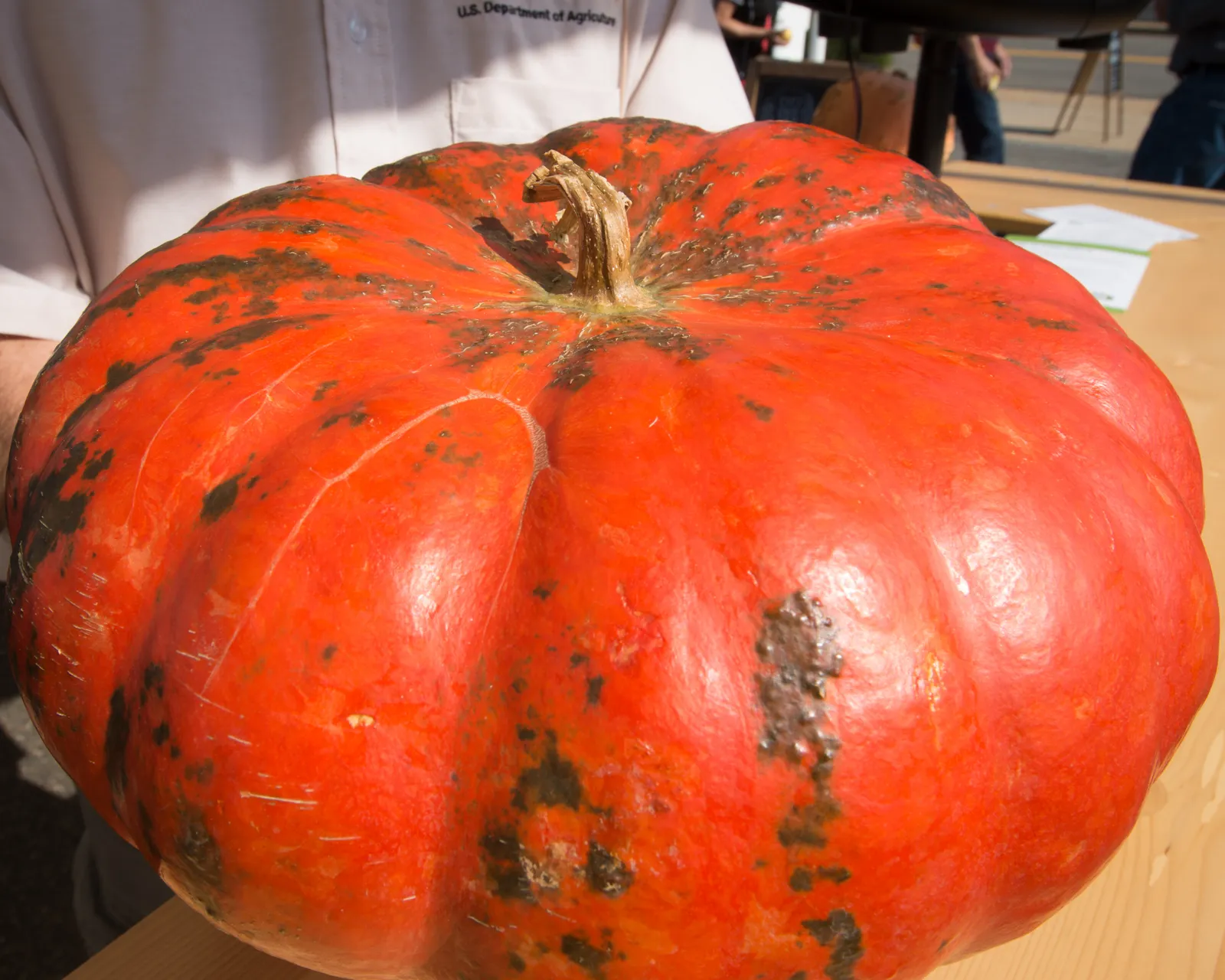
Cinderella (Rouge Vif d'Etampes). Deep red-orange, heavily ribbed, squat and wide. Hard-skinned, holds colour, and its flat top makes it the most stable base for a stack. Large specimens are genuinely heavy, which is a two-person problem and an argument for placing it before anything else.
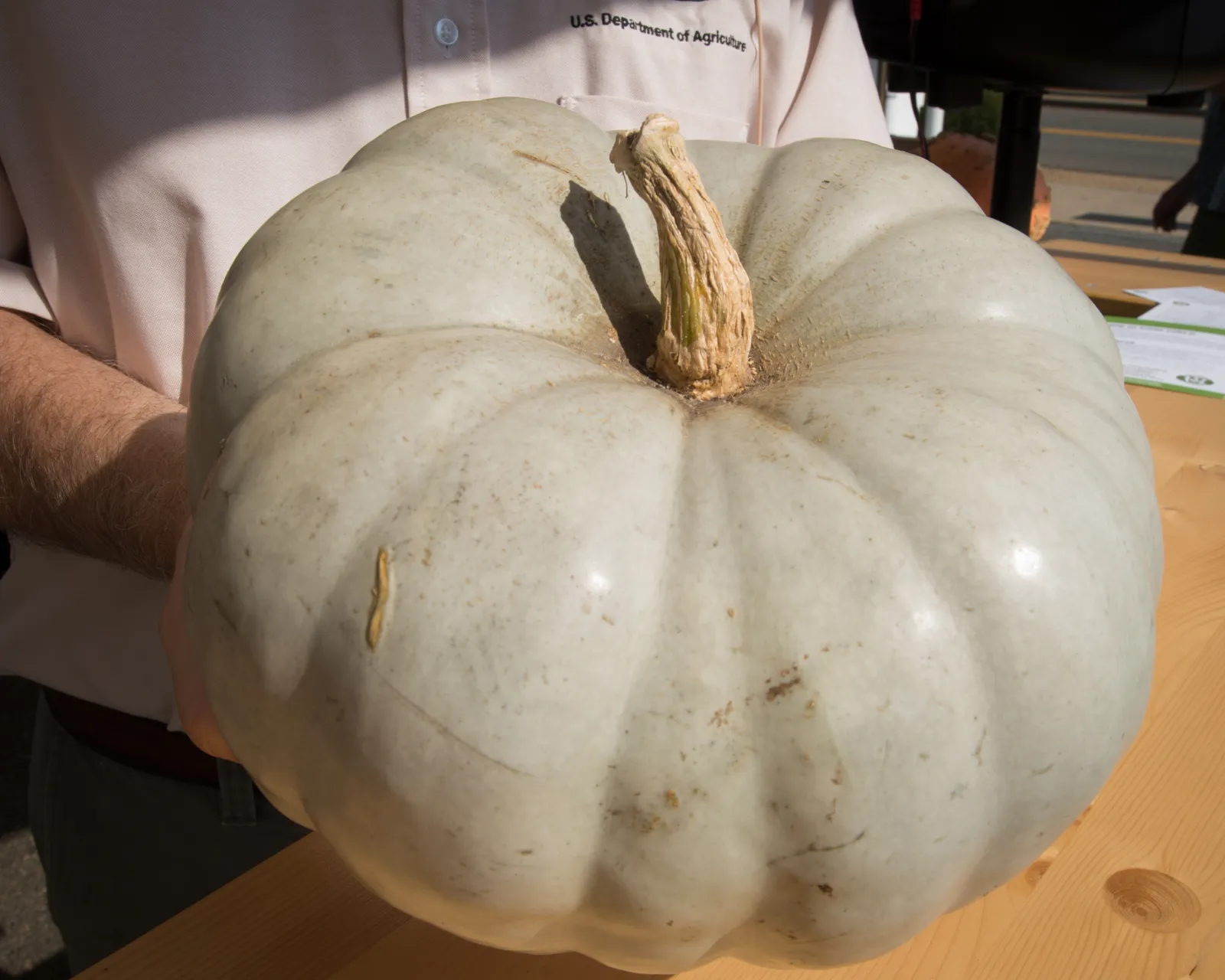
Jarrahdale. Slate blue-grey, deeply ribbed, Australian in origin. The best keeper we handle and the variety that carries the Muted & Modern palette. It does not read as a Halloween pumpkin at all, which is exactly why it works on a house not going for that.
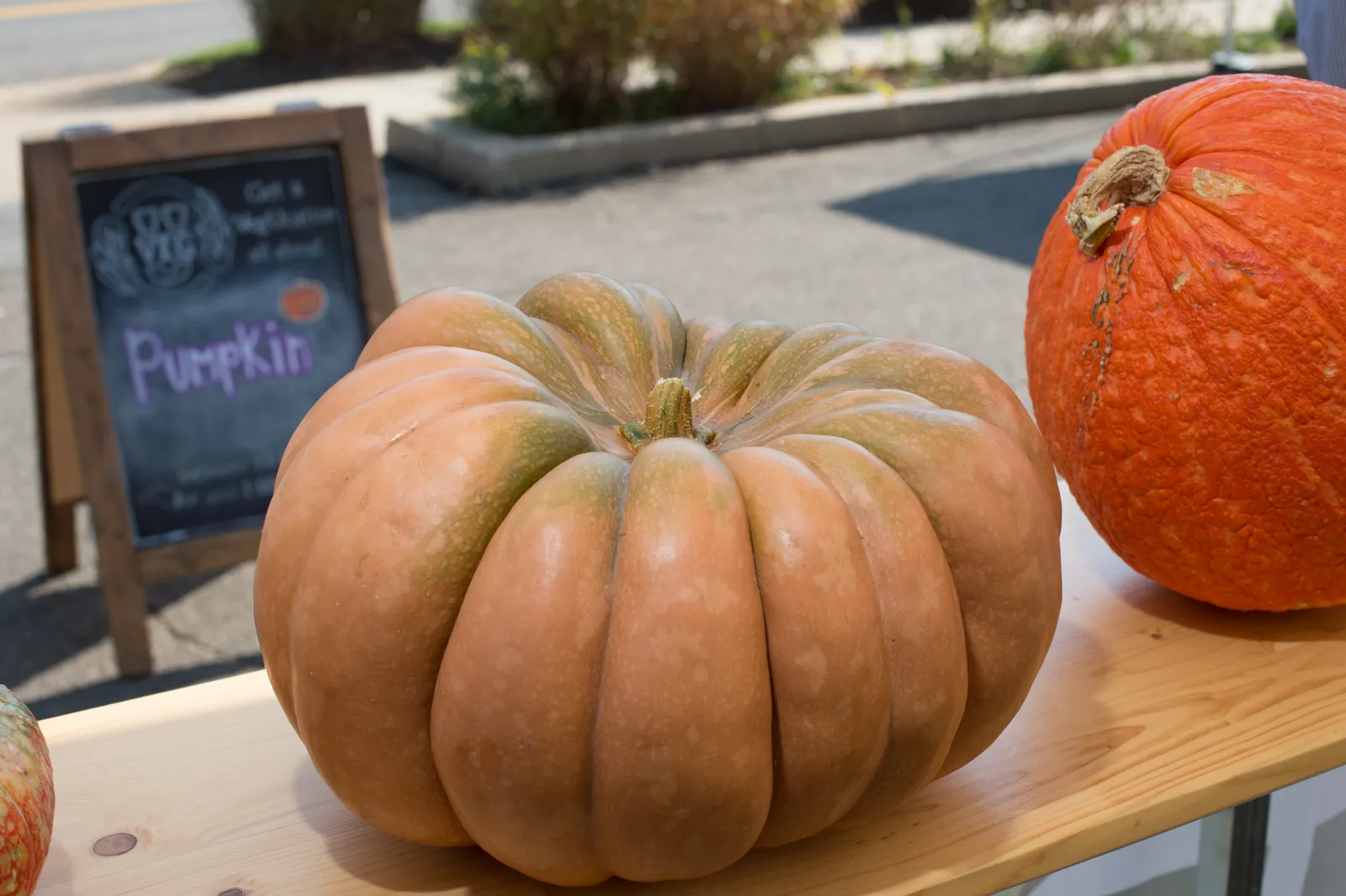
Fairytale (Musquee de Provence). Flattened, heavily lobed, tan turning deep russet as it cures. A moschata rather than a maxima, and moschatas are the most rot-resistant group on a porch. Reliably one of the last things still standing in November.
Blue Doll and other blue hybrids. Powdery blue, rounder and more uniform than Jarrahdale. Easier to source in matched sizes, which matters when you need a pair to flank a door.
02The giants, which are a different purchase entirely
One very large pumpkin does something no arrangement of medium ones can, which is to set the scale of everything around it. It is the reason the Grand level exists and the single feature people remember about a porch. It is also the piece with the most constraints attached, so it is worth understanding what you are actually buying.
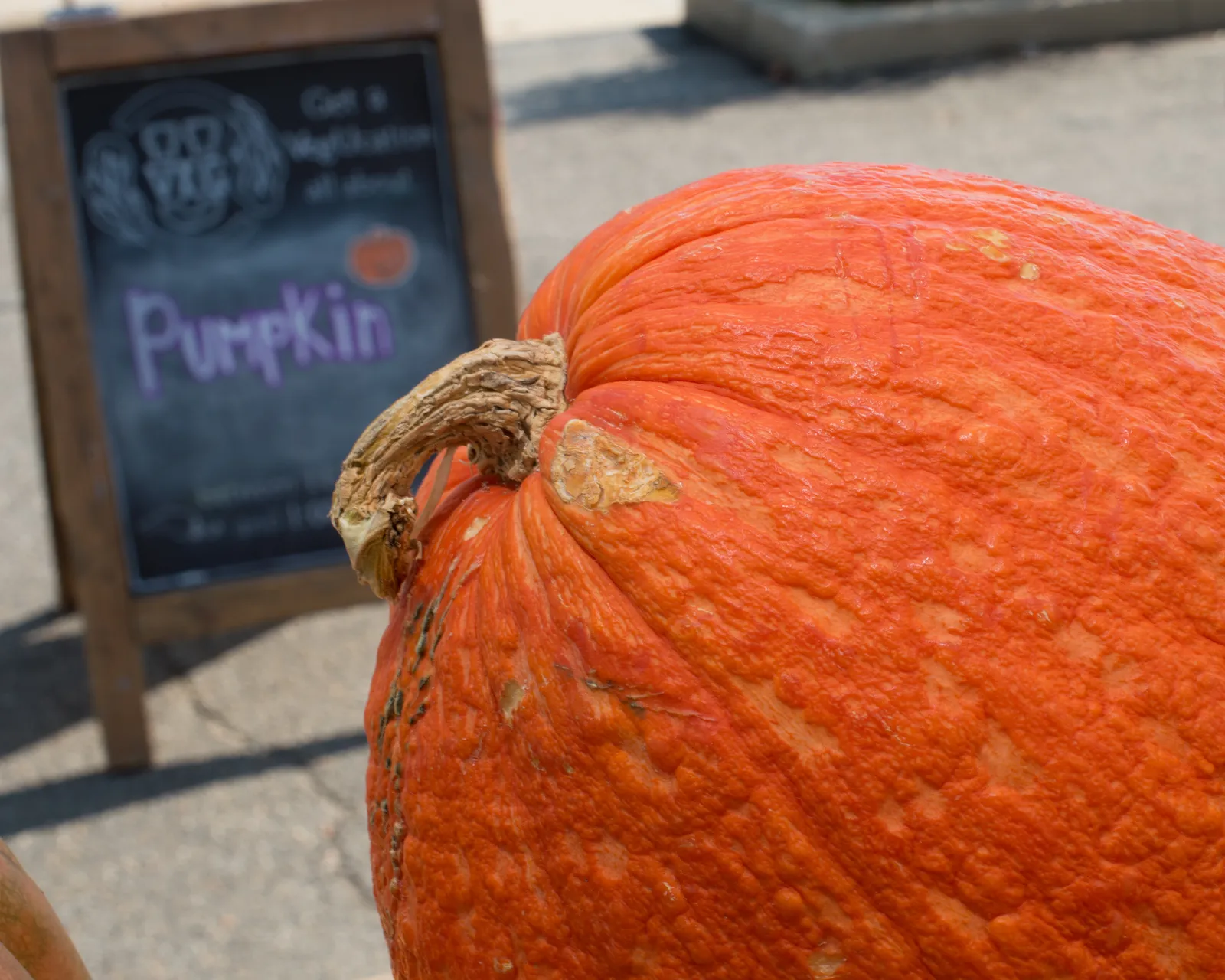
Atlantic Giant (Dill's Atlantic Giant). The cultivar behind essentially every giant you have seen at a weigh-off. A Cucurbita maxima selected by Howard Dill and probably descended from the Mammoth variety sold since 1834. Competition fruit runs past 2,000 pounds, which is not what goes on a porch. The useful range for a display is 50 to 150 pounds: unmistakably huge, still liftable by two people, still shaped like a pumpkin rather than a boulder.
Big Max and Prizewinner. The practical middle. Rounder, more uniform and far easier to source than a true Atlantic Giant, typically 50 to 100 pounds, and a better orange. If you want one commanding piece rather than a record, this is usually the smarter buy.
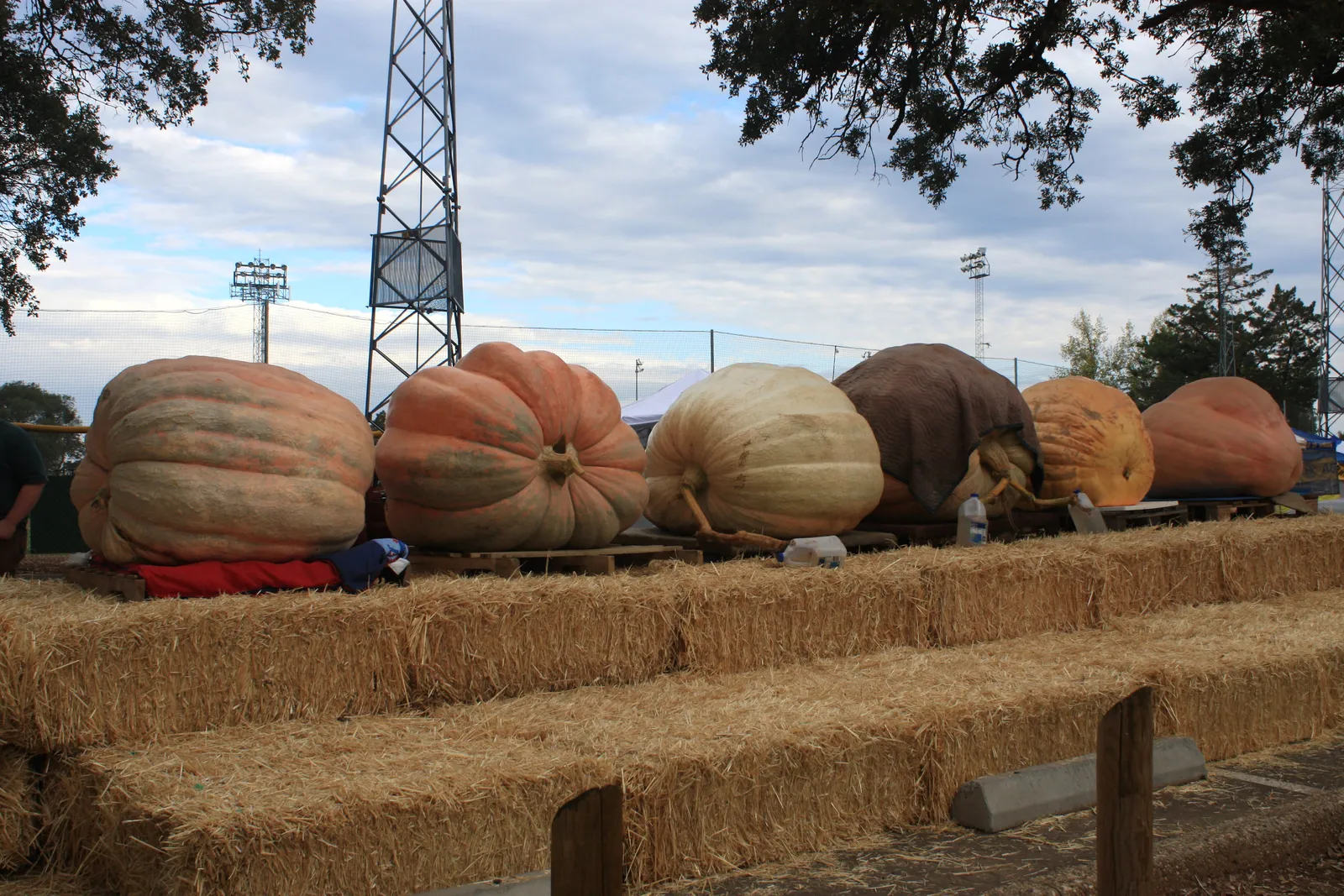
Giants are scarce because of how they grow, not because of markup. A grower prunes the vine to a single fruit so the whole plant feeds one pumpkin, and the season runs 130 to 140 days against 90 to 120 for an ordinary pumpkin. One vine, one fruit, most of a summer. That is the entire explanation for the price.
Northern Utah happens to be good at this. The Utah state record is a 2,289 pound pumpkin grown by Ralph and Juana Laub and weighed at the Logan Center Street Weigh-Off in October 2024, and Cache Valley has a working community of growers behind that number. Our largest pieces come from a Cache Valley grower for that reason: it is a short drive rather than a freight problem, which is most of why a 100 pound pumpkin is available here at all.
Anything past about 80 pounds stops being a decoration you carry and becomes one you site. Decide where it goes before it comes off the truck, because it is not moving twice.
Three practical things follow from the weight. A giant goes down first and everything else is composed around it. It wants a flat, load-bearing spot, not a step edge and not an unsupported deck board, and it is worth putting something under it on flagstone or painted wood. And nothing stacks on top of a giant: it is the base of a composition or it stands alone, never the middle of a tower.
03The focal specimens: one per zone, never more
Each pile gets a single unusual piece placed in the upper third, where the eye lands first. These are the varieties people photograph. Used more than once per zone they stop being focal and start being noise.
Porcelain Doll. Blush pink, smooth, flattened. The most striking thing you can put on a porch and the one guests ask about. It rides high in a pile for that reason. Pink is also the hardest colour to source in quantity, so treat it as a specimen rather than a mass.
Marina di Chioggia. Deep blue-green, dramatically warted, Italian. Reads as sculptural rather than seasonal and carries a whole pile on its own. The warts trap water, so it wants a spot that drains.
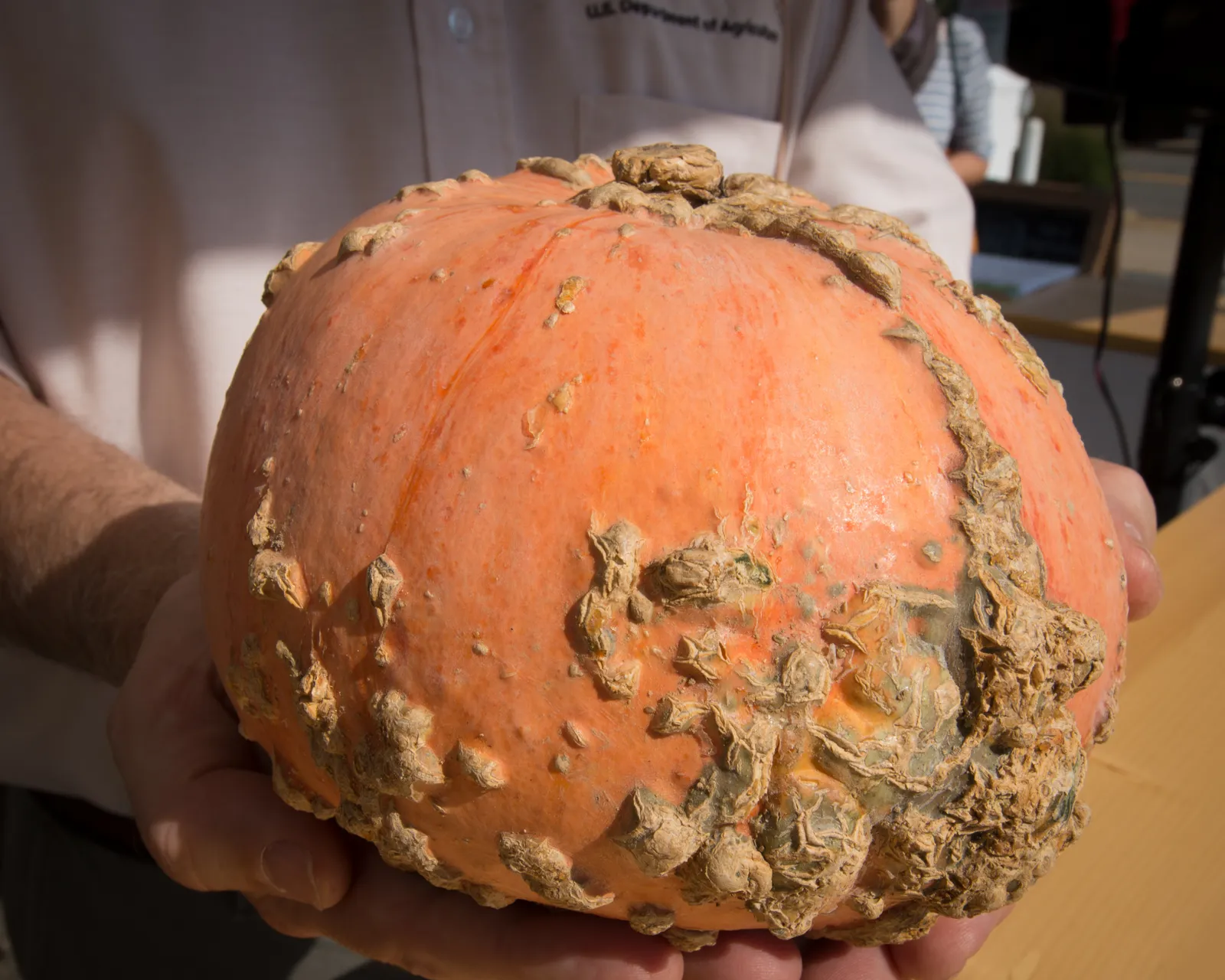
Peanut pumpkin (Galeux d'Eysines). Salmon-buff and covered in raised corky growths that genuinely look like peanuts shelled onto the skin. French, flattened, and the variety that gets picked up and turned over more than any other. Odd enough that one is plenty.
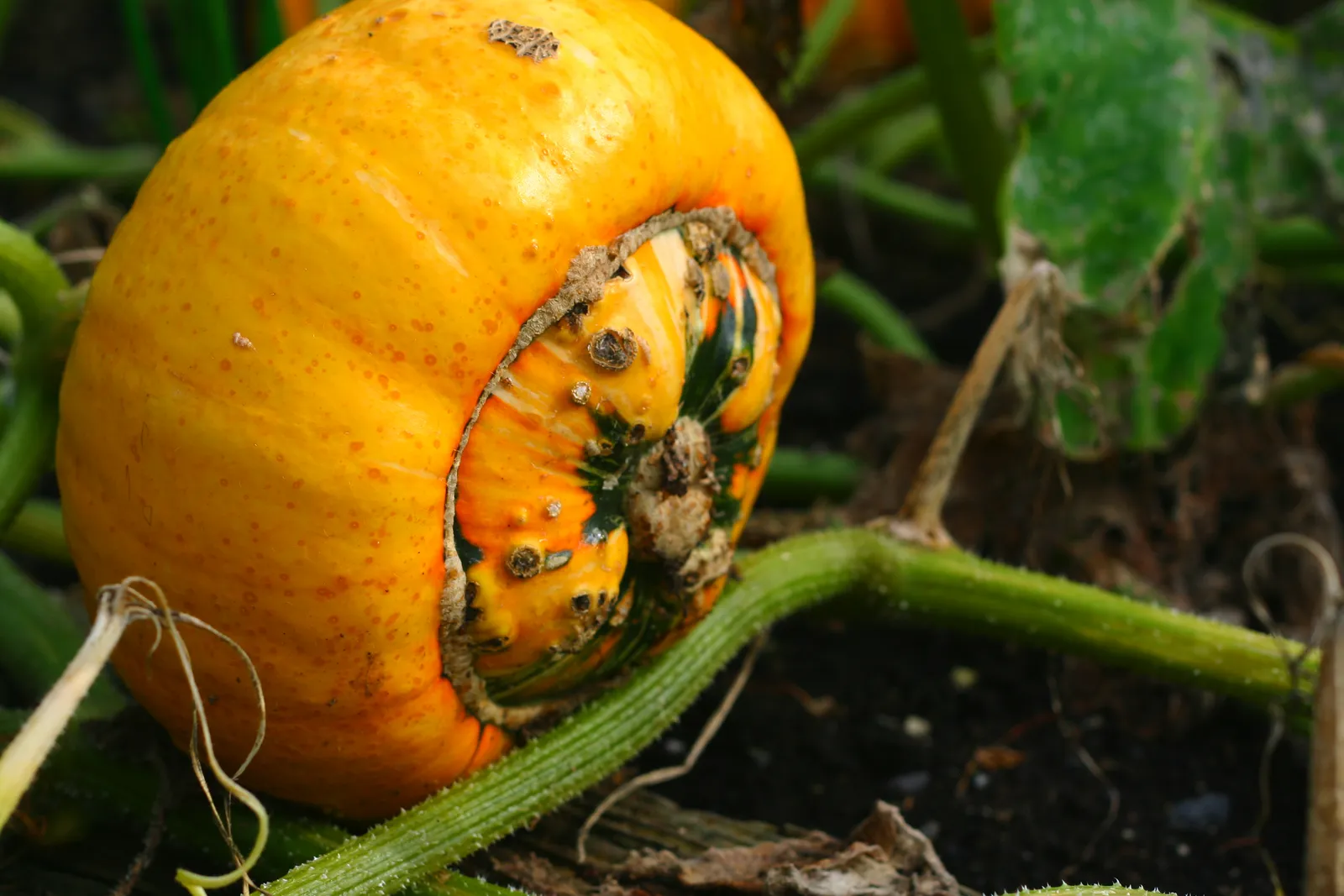
Turban squash. Bicoloured and top-knotted, orange over green or cream. Structurally odd and unmistakable. Small enough to sit on a stack rather than under one.
Warty orange types. Knucklehead, Warty Red Thing and similar. Bred for texture, and worth one or two for the same reason you would not use a single fabric in a room.
04The pale ones, which look best and last least
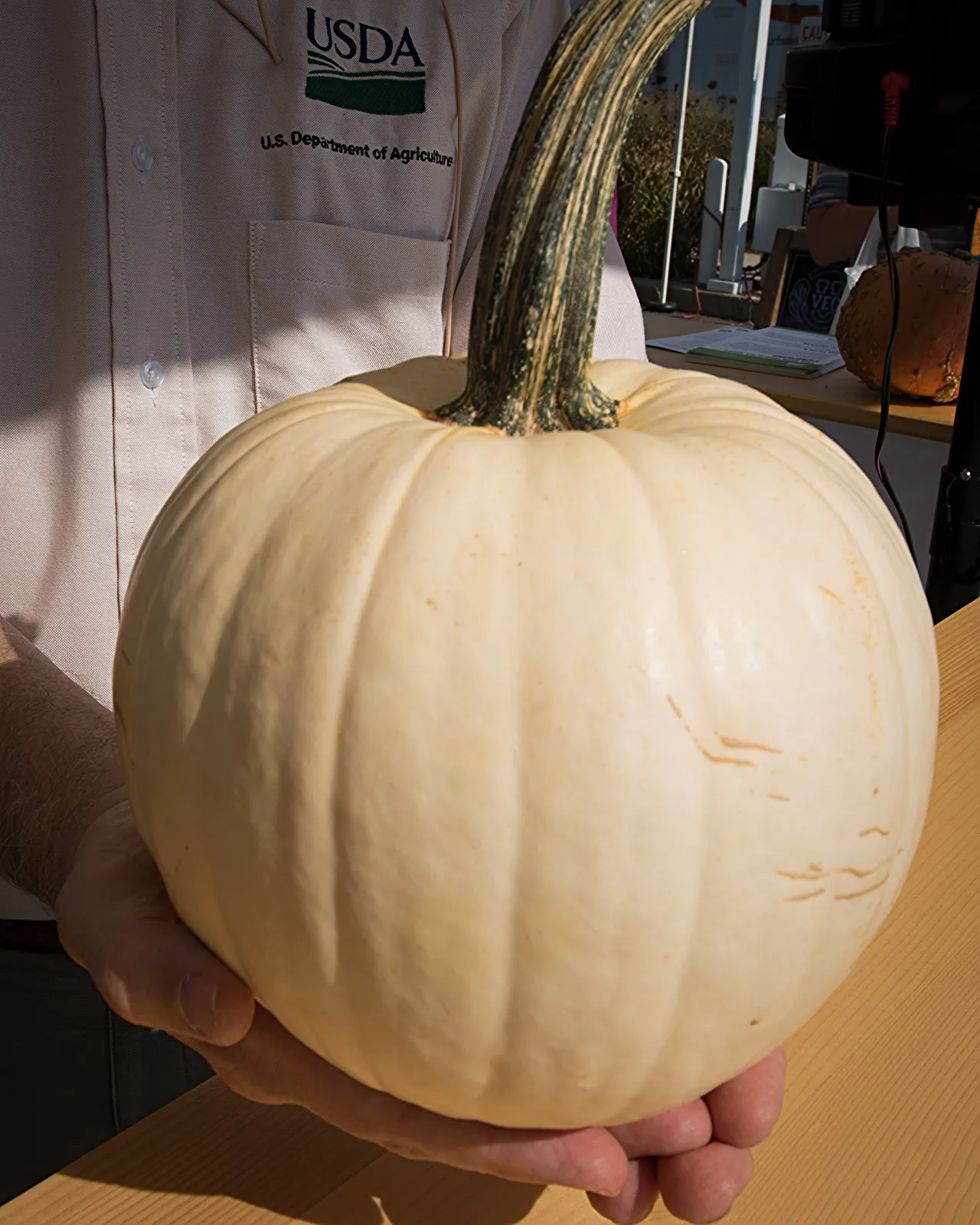
White varieties: Lumina, Casper, Polar Bear, white Sugar. The reason the Green & White palette exists, and the biggest visual upgrade available on an orange-heavy porch. The tradeoff is real: white skin yellows in direct sun and shows every scuff and water mark. On a south-facing porch expect them to look tired weeks before the orange ones do.
Cream and buff types. Long Island Cheese and similar buff-coloured moschatas. Softer than white, warmer than orange, and they keep considerably better than the true whites.
05The fillers: squash, gourds and minis
Nobody builds a display out of these, and every good display uses them. Their job is to close the gaps between large pieces so a pile reads as layered rather than lumpy.
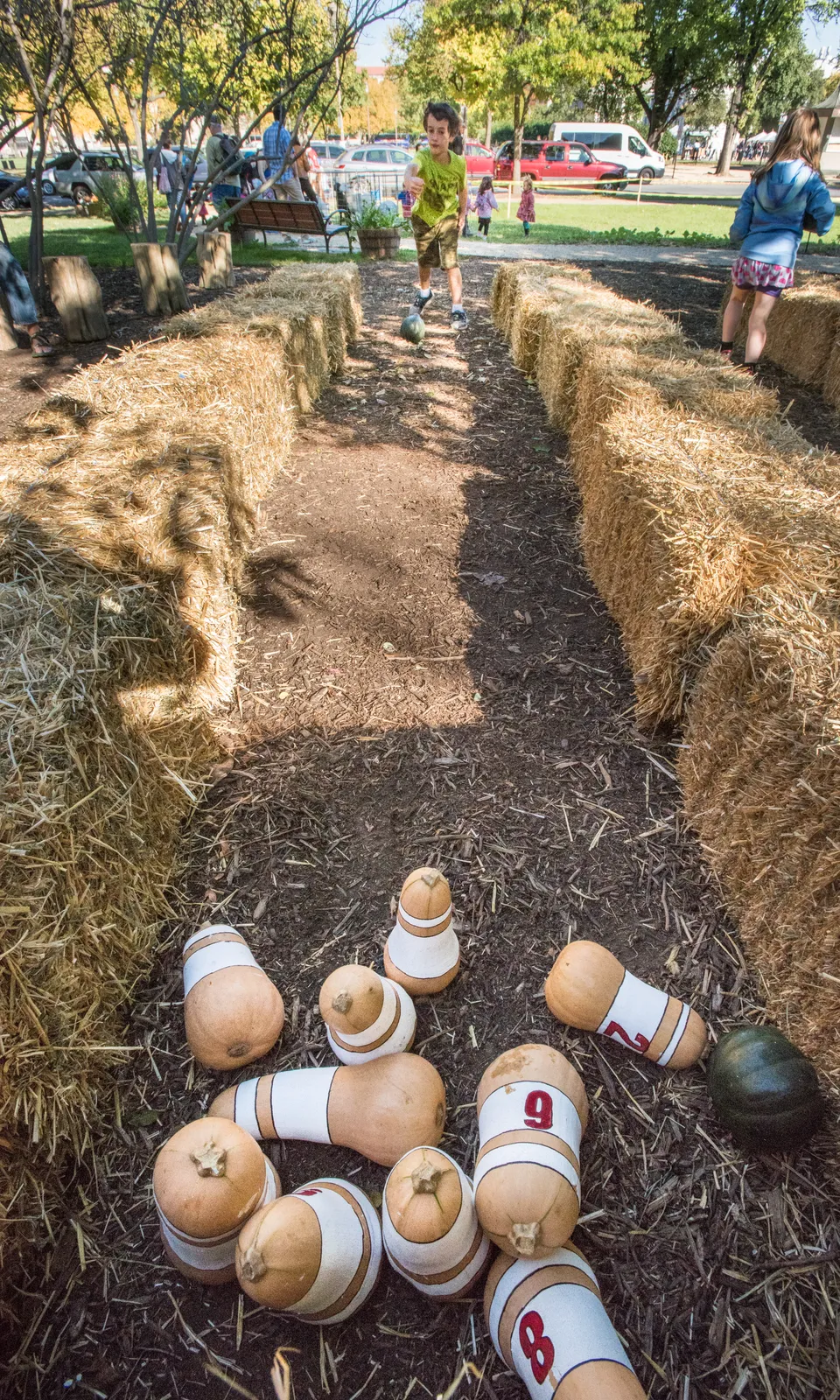
Butternut and other necked squash. Long, tan, and useful precisely because the shape is not round. A horizontal element among spheres, and one of the better keepers on the porch.
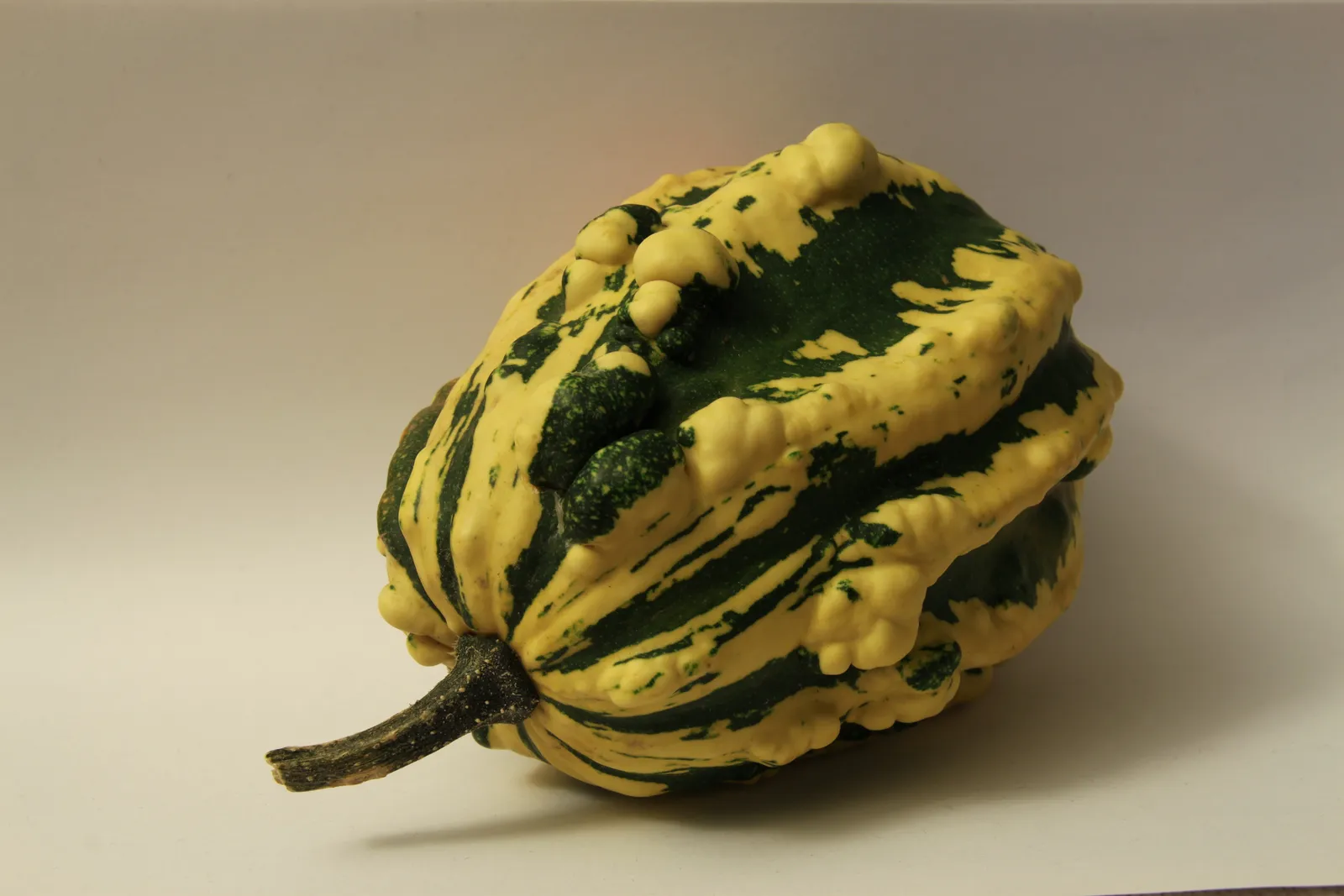
Ornamental gourds. Bicoloured, warted, striped, in every awkward shape. Bought by the crate and scattered into gaps. Individually unremarkable and collectively the difference between a finished pile and a sparse one.
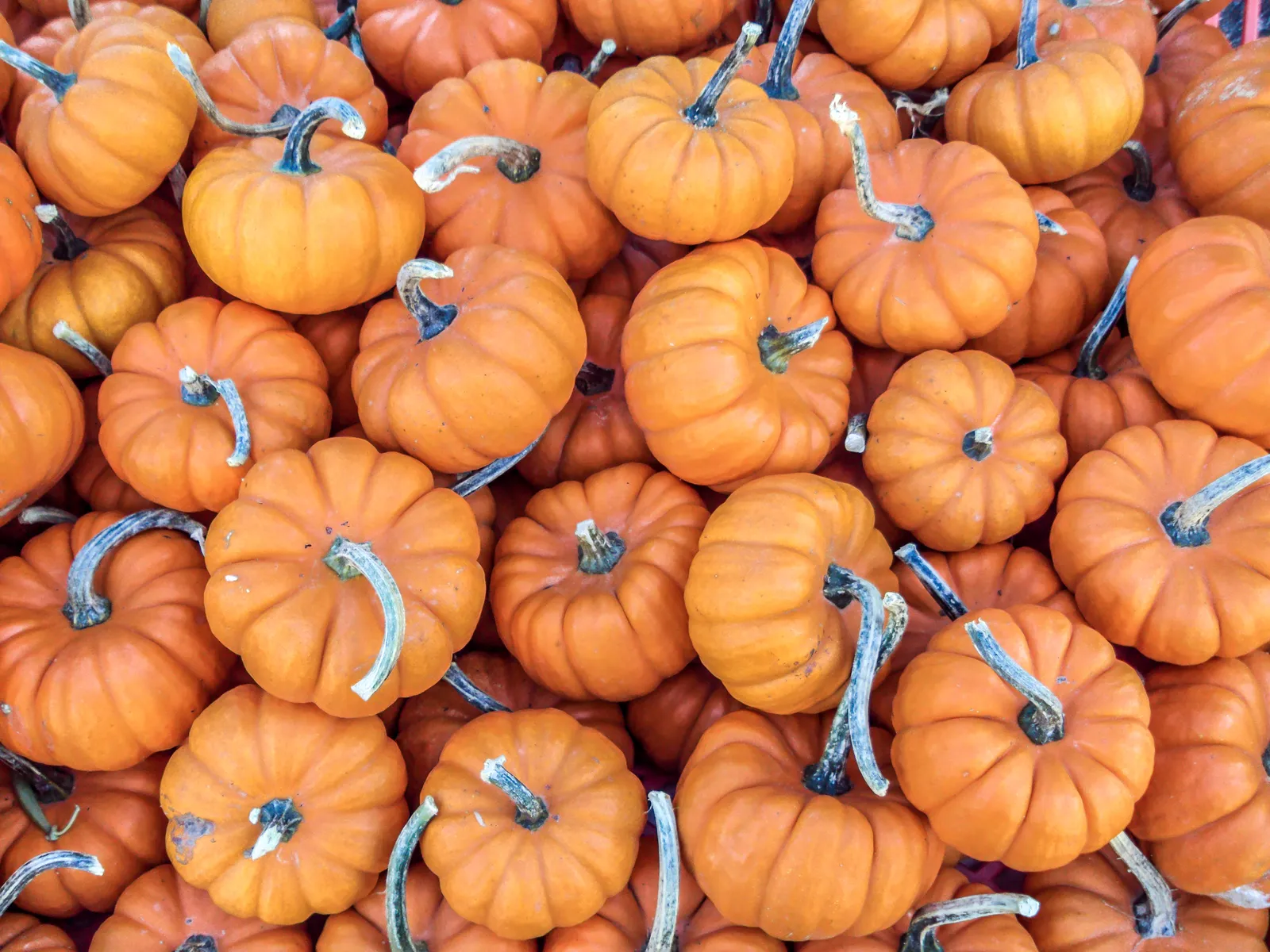
Mini pumpkins: Jack Be Little, Baby Boo. Bought by the flat, not the piece. They have the least flesh of anything on the porch and dry out first, so budget for replacing a few if the display goes up in September.
Kabocha and small dark squash. Dense, dark green, and hard-shelled enough to be among the last things intact. Useful as low mass at the front of a pile where something has to sit directly on stone.
06The carving pumpkins, and what they are actually for
The standard orange pumpkin sold in bins outside every grocery store has a name and a longer history than most of the heirlooms above it on this page. It is Connecticut Field, a Cucurbita pepo first attested in the sixteenth century and grown in America since before the Revolutionary War, or it is Howden, the strain John Howden selected from Connecticut Field for size and uniformity and which is fairly described as the original commercial jack-o-lantern pumpkin.
Connecticut Field. Round, orange, smooth with slight ribbing, usually 15 to 25 pounds. One of the oldest pumpkin varieties still in cultivation and the reference point for what the word pumpkin means to most people.
Howden. The commercial refinement of it, bred for consistent fruit. If you have bought a pumpkin from a pallet at a hardware store, it was probably this.
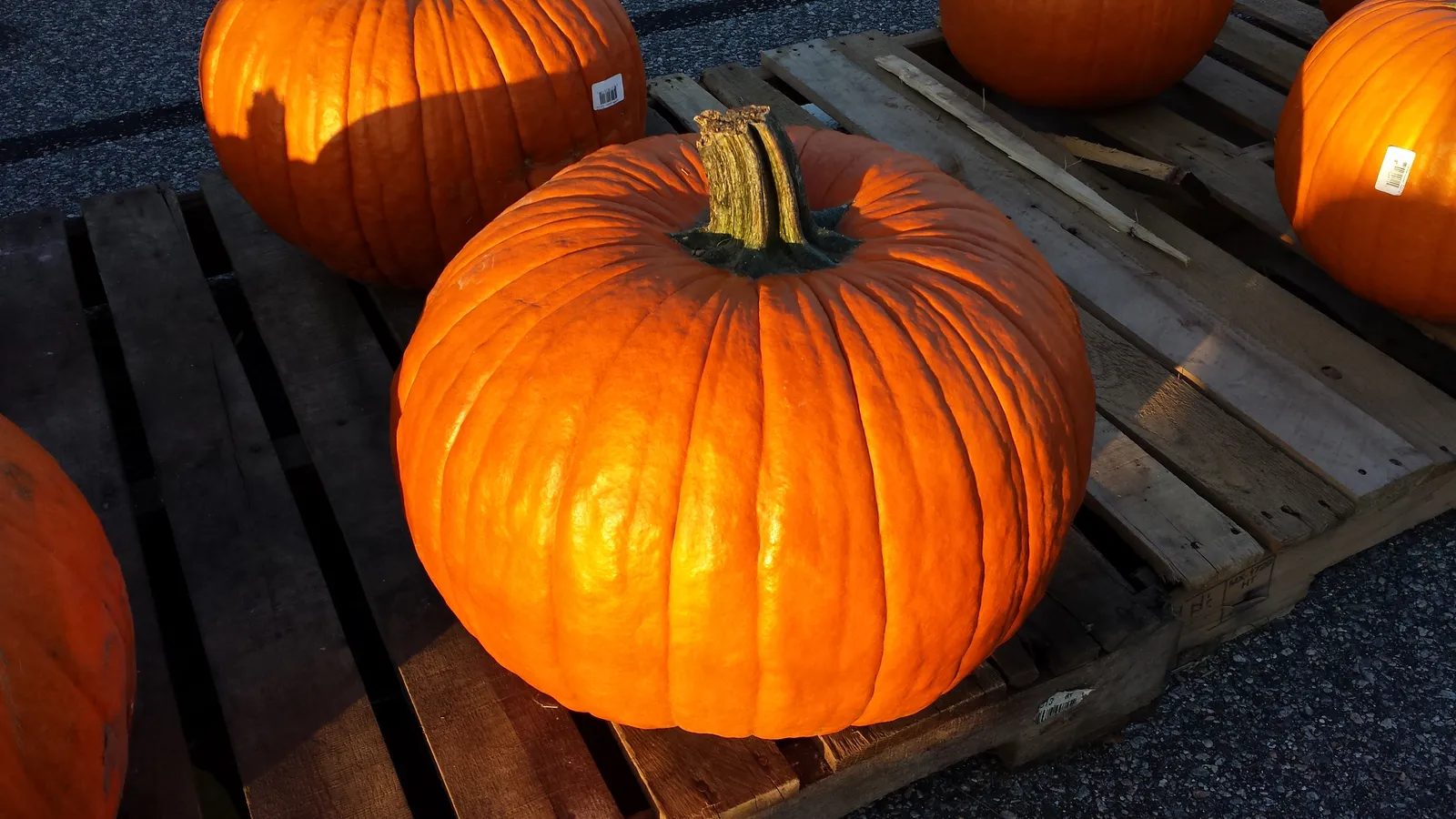
One thing in their favour, and it is commonly got wrong: these grow upright rather than sprawling, so they carry flat bottoms rather than rounded ones. They sit squarely and they stack better than their shape suggests. The blanket claim that jack-o-lantern pumpkins roll off a stack holds for the cheap round hybrids, not for a good Howden.
The real objection is different, and it is about the wall. These are bred to be cut, which means a thin shell and soft flesh, and that is exactly the profile that fails outdoors. Uncut they still go soft weeks before a Jarrahdale does. Cut, a jack-o-lantern gets five to ten days before it caves in. If a porch looks tired by the middle of October, a carved field pumpkin is usually the reason.
So they are not beneath a display, they are simply doing a different job. They are good mass low and to the back where the eye does not settle, they are cheap enough to buy in quantity, and if somebody wants a carved pumpkin on Halloween night then this is the correct pumpkin to carve and no heirloom is a better choice for it. What they should not be is the piece at the front of a display meant to hold from late September into November.
07Which ones the deer find first
In deer country, and that is most of the Wasatch Front benches, Park City and Heber, softness decides what gets eaten. Anything carved goes first, then minis, then thin-skinned field pumpkins. Hard-shelled maximas like Jarrahdale and cured moschatas like Fairytale are the least attractive, though a determined deer will still have a go. We stage the softest pieces where they are hardest to reach for exactly this reason, and what actually deters a deer is a separate question from which pumpkin it prefers.
If you take one rule from this: hard skin and no carving is what buys you two months instead of two weeks. Everything else is preference.
08How many varieties one display needs
Three to five, not ten, however tempting this list makes it. A display reads as designed when a limited palette repeats at different sizes, and as a collection when every piece is different. Pick one workhorse for the large specimens, one focal specimen per pile, and fillers from a single family. Then buy more of those than feels necessary rather than adding a sixth and seventh variety.